
Crisp County Arrest Records and Charges
Crisp County arrest records are first created on the law-enforcement and jail side. They may reflect the arresting agency, booking date, photograph, fingerprints, warrant checks, alleged charges at intake, bail decision, and court-date setting. The official Crisp County Jail information page describes intake as a process that can include identification, medical and mental-health screening, a search for contraband, photographing, fingerprinting, clerical entry, warrant checks, and bond review. That is a custody record, not the full court case.
Court charges after arrest move through a different path. Law enforcement may book a person on an alleged offense, but the prosecutor decides what formal counts are filed in court. In Crisp County, felony prosecution points to the Cordele Judicial Circuit District Attorney. The filed charge record may then appear in Superior Court records, Magistrate Court first-appearance materials, Probate Court traffic or misdemeanor records, or City of Arabi Court citation files. Booking facts are useful for custody status, but the formal case result belongs in the court file. For the full case file, pleas, disposition, and sentence, use the Crisp County criminal court records page.
The Crisp County Jail booking information source did not produce a manifest image file, but it is still the key official source for the arrest and booking side of the record. Its booking timeline explains why early arrest data may lag or differ from later court charges.
Crisp County Charges After Arrest
Crisp County charges after arrest should be read from the court or prosecutor source that fits the case. Felony accusations and indictments normally route through Superior Court and the Clerk of Superior & Juvenile Courts. Traffic and certain misdemeanor citations from the Crisp County Sheriff's Office or Georgia State Patrol route to Probate Court unless the citation was issued inside the City of Arabi. Magistrate Court can be involved at the warrant and first-appearance stage, while the Sheriff's Office keeps arrest, jail, and open-records materials.
Prepare more than one lookup path. A person may be arrested before a formal accusation or indictment is filed. A bond or first-appearance entry may exist before the Superior Court criminal case is easy to locate. A traffic failure-to-appear may sit with Probate Court or City of Arabi Court. If the person is still jailed, VINE or the jail phone line may confirm custody faster than a court-file request. If the charge has become a filed case, the clerk or court office will need the defendant name, case number if known, date range, and court type.
- Start with the arrest or custody source when the question is whether the person was booked or remains in jail.
- Use the issuing court when the question is which charge was filed, amended, dismissed, or set for hearing.
- Call the Clerk of Superior & Juvenile Courts for felony Superior Court records and the District Attorney's role in formal charges.
- Check Probate Court or City of Arabi Court for traffic and local citation matters tied to missed court dates.
- Use state systems only for the state-level record they actually provide, such as felony conviction checks or sex-offender registry data.
Crisp County Charging Documents
A charging document is the paper or entry that states the count being prosecuted. The exact label depends on the charge level and court. In Georgia practice, the terms complaint, accusation or information, and indictment may appear at different stages or for different case types. A court charge record can show one count or several counts from the same arrest. Some counts stay pending, some are reduced, and some are dropped before plea, trial, or sentencing.
| Document | Who Uses It | What It Usually Shows | Crisp County Record Path |
|---|---|---|---|
| Complaint or citation | Law enforcement or court intake | Alleged offense, date, agency, defendant, and court appearance path. | Sheriff, Magistrate, Probate, or City of Arabi depending on the event. |
| Accusation or information | Prosecutor | Formal count filed by the state without a grand-jury indictment in the applicable case type. | District Attorney and Clerk of Superior & Juvenile Courts for Superior Court cases. |
| Indictment | Grand jury | Formal felony count or counts returned for prosecution. | Superior Court criminal file maintained through the clerk. |
The GDC location listing for Crisp County Jail identifies the county jail location but does not serve as a charge database.
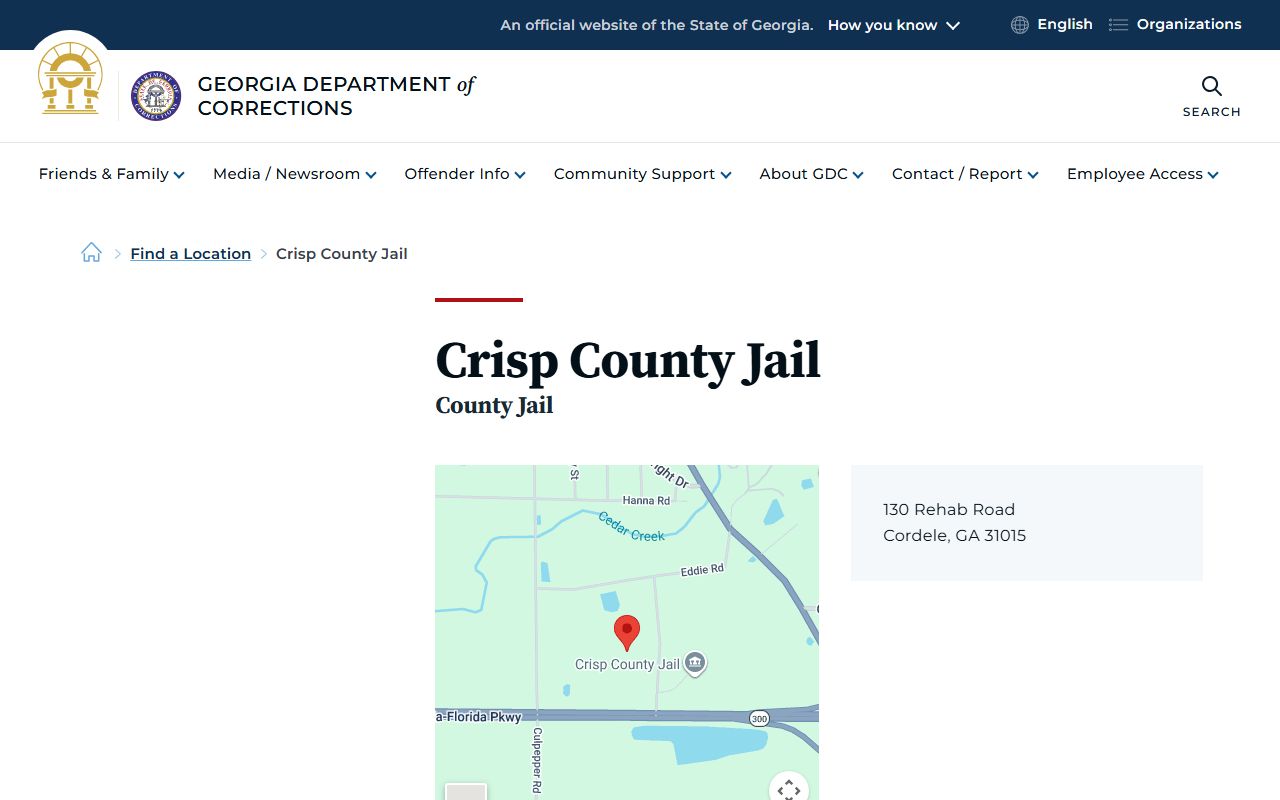
That distinction matters because jail-location information can support custody routing, while filed court charges must be checked with the court or prosecuting source.
Crisp County Charge Status
Charge status is the best way to avoid confusing an allegation with a result. A count may remain pending for months. It may be amended to a different offense, reduced through plea negotiation, dismissed by the court, or marked nolle prosequi when the prosecutor declines to proceed. A docket entry may also show dead docket status, which means the case has been made inactive, not that it vanished from all systems.
| Status | Plain Meaning | What to Confirm |
|---|---|---|
| Pending | The count has been filed and is not yet resolved. | Next hearing date, bond status, and whether the count was amended. |
| Amended or reduced | The filed charge changed after review, plea talks, or court action. | Original count, current count, and the date of the change. |
| Dismissed | The count or case was ended by court action. | Whether dismissal was with prejudice, without prejudice, or tied to another count. |
| Nolle prosequi | The prosecutor declined to continue the charge. | Whether any other counts remain open. |
| Dead docket | The case was moved to inactive status. | Whether the case can be restored and whether bond or warrant issues remain. |
Note: A charge status in a court file should be verified with the court that issued the entry before it is used for a legal purpose.
District Attorney Filing Role
The official Crisp County District Attorney page names Brad Rigby as District Attorney for the local office at 510 South 7th Street, Suite 102, Cordele, with phone (229) 271-4735. The DA's office is central to court charges after arrest because law enforcement does not make the final prosecution decision for Superior Court felony counts. The prosecutor reviews the arrest facts, reports, witness issues, evidence, and legal elements before deciding what formal counts to file, reduce, dismiss, or present for indictment.
The DA role also matters after a case ends. The Georgia Bureau of Investigation explains that for arrests after July 1, 2013, many record-restriction requests start by contacting the prosecutor rather than using the older arresting-agency application path. That means a Crisp County arrest record, a court charge record, and a state criminal-history restriction request may involve three different offices: the Sheriff's Office, the court clerk, and the prosecutor.
The local District Attorney page did not yield a manifest image, but it supplies the official contact point for prosecutor filing decisions.
Crisp County Charge vs Conviction
A charge is not a conviction. A charge states what the state accuses a person of committing. A conviction comes later, only after a guilty plea, a verdict, or another court outcome that establishes guilt. Crisp County arrest records may list alleged charges at booking, and a court case may list formal counts, but neither one proves conviction unless the record also shows a guilty plea, guilty verdict, sentence, or final disposition tied to that count.
| Point of Comparison | Charge | Conviction |
|---|---|---|
| Stage | Filed or alleged before final outcome. | Entered after plea, verdict, or qualifying judgment. |
| Proof level | May begin from probable cause or prosecutor filing. | Requires court acceptance or proof beyond a reasonable doubt. |
| Where seen | Booking, warrant, accusation, indictment, citation, or docket. | Disposition, sentence, judgment, or statewide conviction record. |
| Common mistake | Treating a filed count as proven. | Ignoring reduced, merged, dismissed, or nolle prosequi counts. |
Crisp County State Charge Sources
Statewide systems do not replace the Crisp County court record, but they can answer related questions. The GBI criminal-history FAQ says public felony conviction access under Georgia law requires full name, race, sex, and date of birth. Georgia Felon Search is the state service for public felony conviction checks. The GBI Sex Offender Registry is a separate registry tied to Georgia sex-offender law, not a general arrest list. GDC tools may help with state-prison or county-jail location context, but they are not the Superior Court file.
The GBI Sex Offender Registry service page explains the state registry function and why registry records are not the same as booking records or filed charge records.
The registry can be useful when the legal question involves registration status, but it should not be used as a substitute for the Crisp County court disposition.
The public Georgia Sex Offender Registry search portal is the searchable side of the same state registry system.
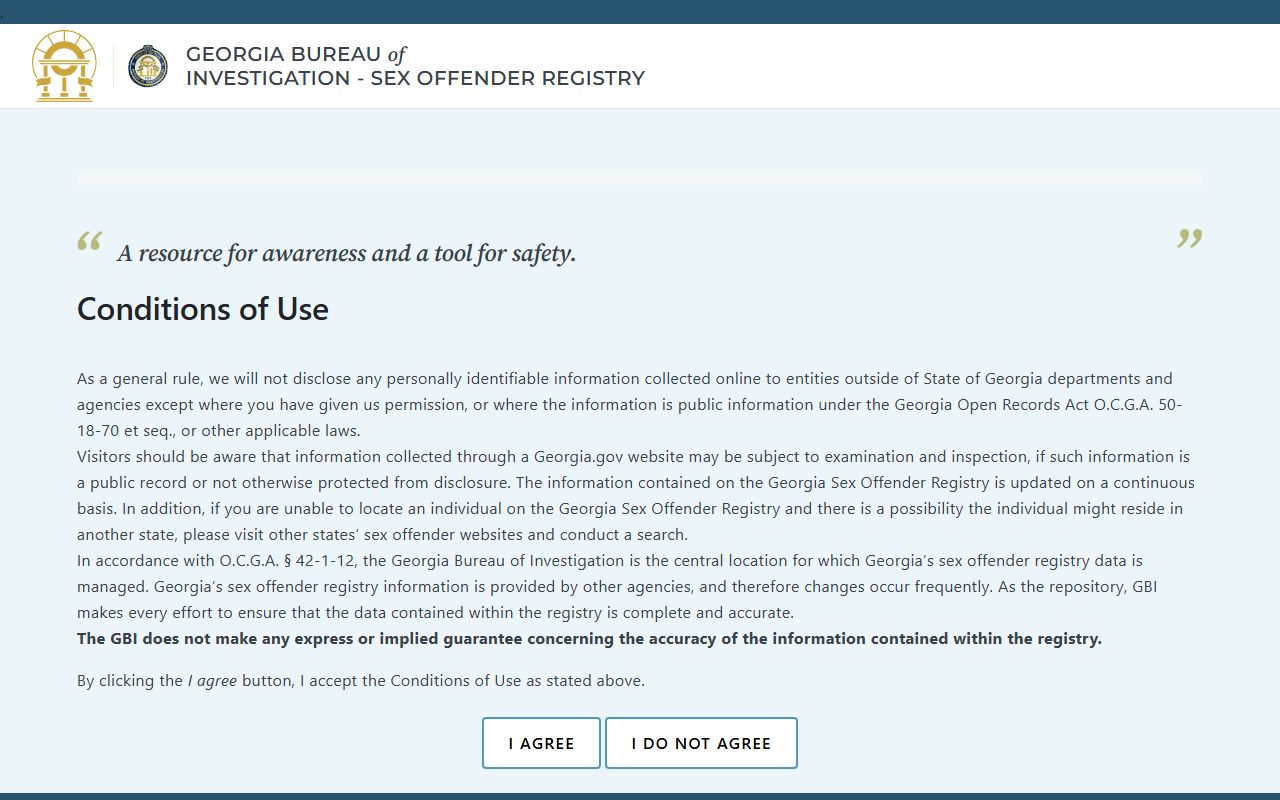
A registry match should be read with the profile details and verified against court records when the question is the original charge or conviction.
Restricted Crisp County Charge Records
Georgia public access law favors disclosure, but Crisp County arrest records and charge records can still be limited. Juvenile Court records have special access rules. Probate mental-health or involuntary-evaluation records are sensitive. Some search warrants may be sealed during an investigation. Civil filings must redact specified personal data, and some unredacted filings may be sealed. Criminal-history record restriction under O.C.G.A. 35-3-37 can limit certain arrest or charge records for non-criminal-justice purposes when the legal criteria are met.
For Georgia civil filing redaction rules, the manifest includes O.C.G.A. 9-11-7.1, which is relevant when court documents contain protected personal information.
The redaction rule helps explain why a public court charge entry may exist while personal identifiers or sealed attachments remain unavailable.
For Georgia record restriction, the research source points to O.C.G.A. 35-3-37. The manifest image capture failed for that source, so it is linked here only as a legal reference.