
Search Crisp County Court Records
Crisp County does not publish one county-branded search system that covers every court record. The practical first step is to identify the record type. Felony, divorce, major civil, equity, title-to-land, and many judgment records route to the Clerk of Superior & Juvenile Courts. Probate estates, guardianships, conservatorships, marriage licenses, weapons carry licenses, and many local traffic matters route to Probate Court. Magistrate Court is the local lower court for smaller civil claims, dispossessory matters, and warrant or first-appearance functions. Juvenile Court records are much more restricted.
Statewide tools help with some Crisp County records, but each tool has a narrow use. re:SearchGA is described as a Georgia case information and document portal for participating counties. GSCCCA searches are strongest for real estate, lien, UCC, plat, notary, PT-61, certified search, and premium clerk-index products. Criminal history checks, sex offender records, prison custody, and driver history are handled by separate state agencies.
- Choose the court or agency based on the record type, not just the person's name.
- Prepare a case number, party name, date range, record type, and court name if known.
- Use GSCCCA, re:SearchGA, PeachCourt, Odyssey eFileGA, EZCourtPay, VINE, GBI, GDC, or DDS only when that system matches the record.
- Call the local office when no online Crisp County case database exists or when certified copies are needed.
- Ask about copy fees, certification, sealed records, redaction, and whether the file is stored off site.
Crisp County Court Offices
The main courthouse for Crisp County court records is in downtown Cordele. The same courthouse area includes the Clerk of Superior & Juvenile Courts, Probate Court, Magistrate Court, Juvenile Court, and Cordele Judicial Circuit functions. The District Attorney is nearby on South 7th Street. County administration is at the Crisp County Government Center, which also hosts commission meetings and public meeting recordings.
Use the office that created or maintains the file. Tara Hayslip, the Clerk of Superior & Juvenile Courts, handles Superior and Juvenile filings plus real and personal property filings, trade names, fifas, liens, jury matters, and related clerk duties. Judge Amber Roberts presides over Probate Court. Chief Magistrate Brandon Rivers and Magistrate Scott Hawkins are tied to Magistrate Court functions. Sheriff Billy Hancock's office handles sheriff records, jail records, open-records requests, and public-safety links.
Crisp County Court System
Georgia is not a district-court state for Crisp County's main trial court. The primary trial court is Superior Court, and Crisp County is part of the Cordele Judicial Circuit in the Eighth Judicial Administrative District. Superior Court is the broad trial court for felonies, divorce, equity, title to land, major civil matters, and appeals allowed from lower courts. The Court of Appeals of Georgia and the Supreme Court of Georgia handle appellate review in categories set by law.
The lower courts are not side notes. They are often the correct source for local records. Probate Court handles estates, guardianships, marriage licenses, weapons carry licenses, involuntary evaluations, and many Crisp County traffic citations. Magistrate Court handles lower-dollar civil claims and warrant or first-appearance routing. Juvenile Court handles child-related cases with restricted access. City of Arabi Court handles certain citations issued inside Arabi.
Case flow: Magistrate, Probate, Municipal, or Juvenile filing › Superior Court when within its jurisdiction or on appeal › Court of Appeals of Georgia or Supreme Court of Georgia when appellate law allows review.
| Court or Office | Role in Crisp County | Common Records |
|---|---|---|
| Superior Court | Primary trial court in the Cordele Judicial Circuit | Felony, divorce, major civil, equity, title to land |
| Probate Court | Probate, licensing, traffic, and certain misdemeanor venue | Estates, guardianships, marriage, weapons carry, traffic |
| Magistrate Court | Lower court and warrant-related channel | Small civil claims, dispossessory matters, warrants |
| Juvenile Court | Child-related court with restricted records | Juvenile filings, support agency contacts, sealed material |
| City of Arabi Court | Municipal citation venue for Arabi cases | Traffic citations issued inside the city |
Crisp County Court Record Types
Crisp County court records include more than case dockets. A Superior Court file may hold complaints, answers, motions, orders, judgments, divorce decrees, felony indictments, accusations, bond orders, plea paperwork, verdicts, sentencing orders, probation terms, restitution, and appeals. A Probate Court file may hold wills, petitions, guardianship or conservatorship filings, inventories, annual returns, marriage license applications, and traffic citation records. A Magistrate Court file may hold lower civil claims, dispossessory records, and warrant-related entries.
- Civil records: complaints, answers, motions, orders, judgments, liens, garnishment, and appeal filings.
- Criminal court records: charges as filed, arraignment, plea, motion, hearing, disposition, sentence, and appeal entries.
- Probate records: estates, wills, guardianships, conservatorships, inventories, orders, and marriage licensing records.
- Traffic records: citation number, charge, court date, payment or contest status, disposition, fine, cost, and failure-to-appear status.
- Property and lien records: real estate, UCC, lien, plat, notary, PT-61, fifas, and related clerk-index records.
Crisp County Records Portals
Georgia state systems fill gaps left by the lack of a single Crisp County court-record database. The Georgia Department of Corrections is a statewide custody source after a person moves into state correctional custody, and its site also lists Crisp County Jail as a county jail location. The image below comes from the Georgia Department of Corrections home page, which is useful when a county jail search is no longer the right custody channel.
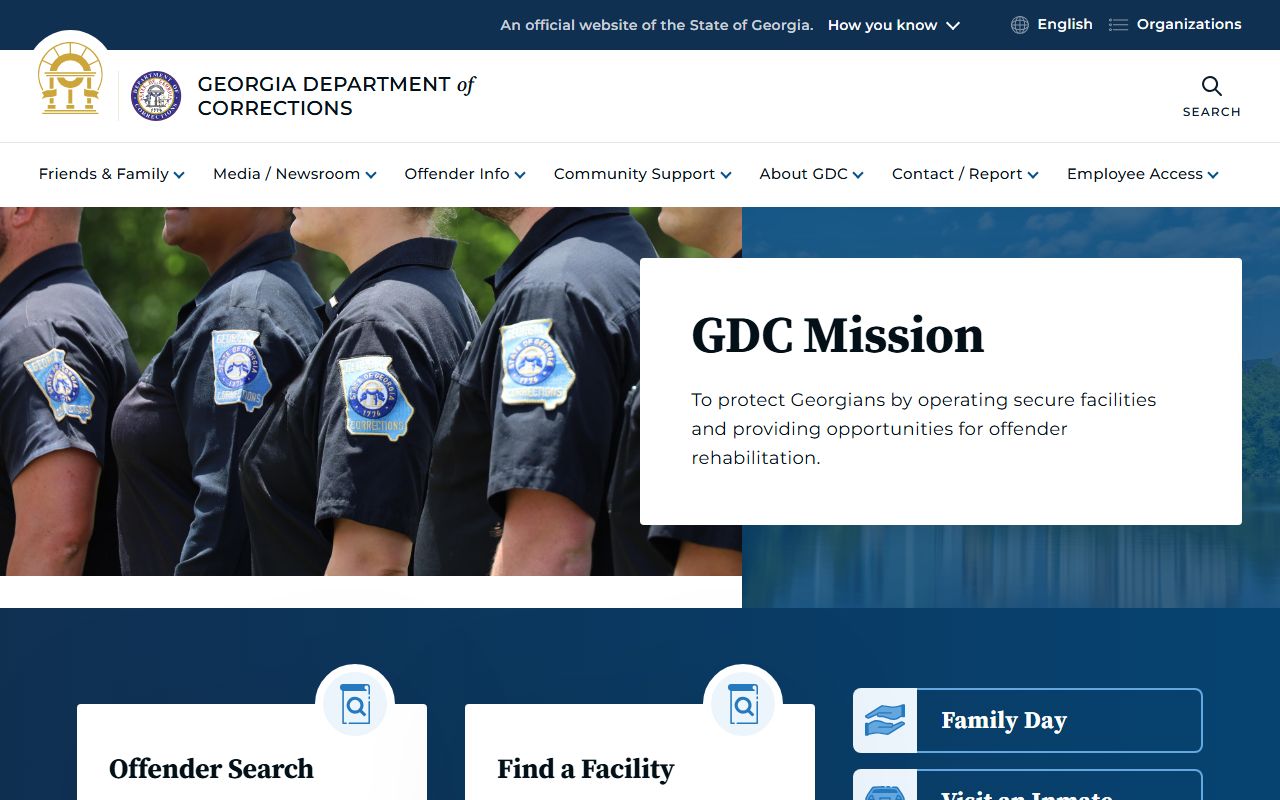
County jail, state prison, and federal custody records are separate. Crisp County Jail questions start with the jail or VINE. State prison records move to GDC. Federal custody moves to the Bureau of Prisons or federal court records.
The Georgia Bureau of Investigation is the state source for Georgia Felon Search, criminal-history record restriction guidance, and the sex offender registry. The GBI source shown below matters because a felony conviction check is not the same thing as a Crisp County Superior Court file or a jail booking record.
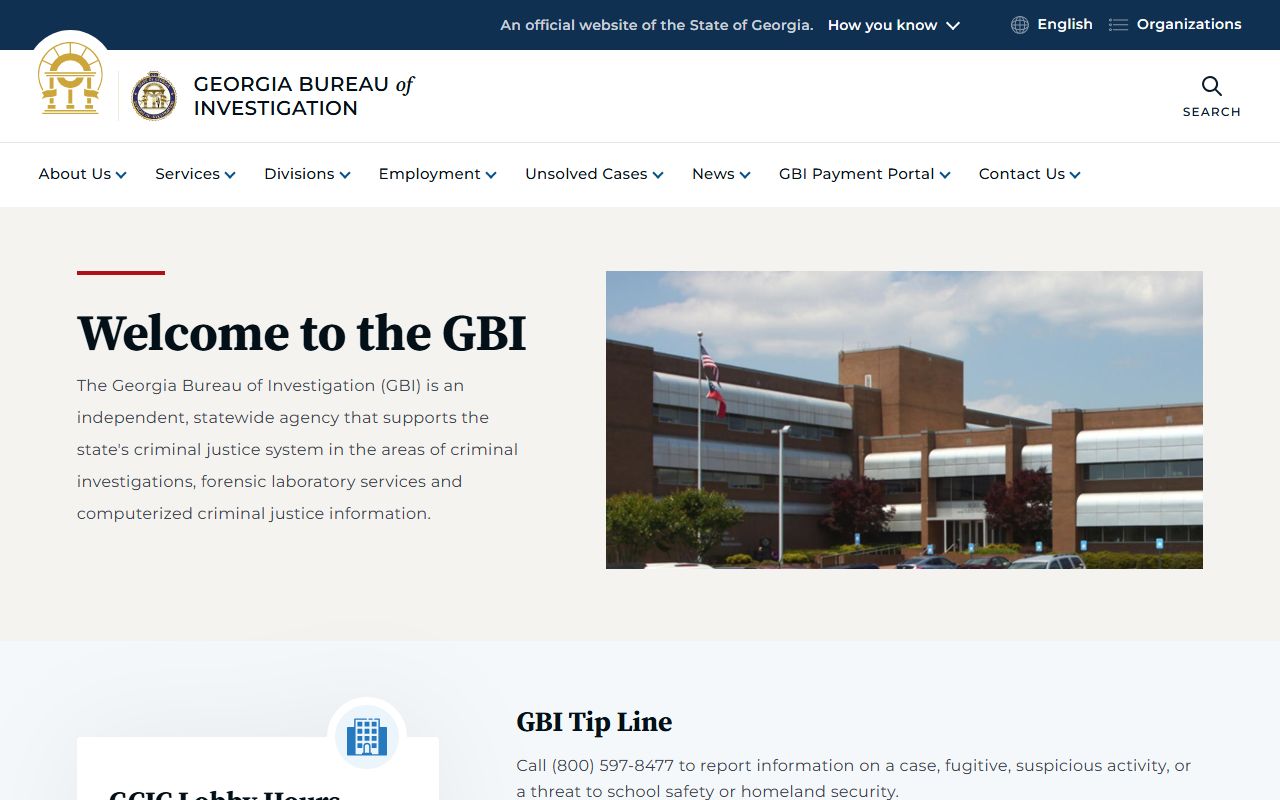
Use GBI tools for statewide criminal-history or registry questions. Use the court clerk for the case file, pleadings, orders, and certified copies.
The GSCCCA statewide search menu is the strongest online path for many clerk-indexed non-case records, including real estate, lien, UCC, plat, notary, PT-61, certified search, and premium products. The screenshot below reflects that statewide search function rather than a local Crisp-only case search.
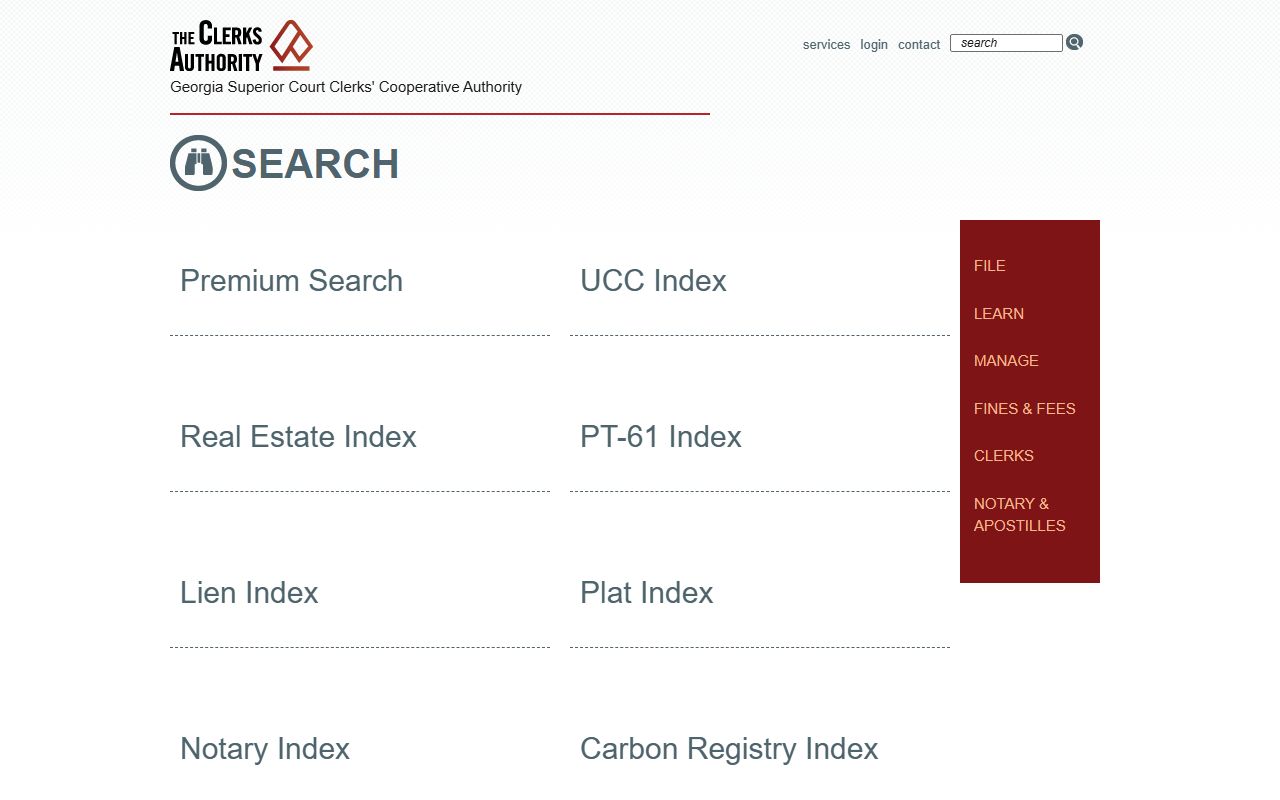
GSCCCA can help with property and filing indexes handled through the Superior Court clerk system. It should not be treated as a full substitute for the Clerk of Superior & Juvenile Courts when a person needs a certified case document.
Crisp County Court Record Fields
A Crisp County court record can show different fields depending on the court. Case files often include the case number, court, filing date, case type, parties, attorneys, judge, docket entries, hearings, disposition, judgment, sentence, financial obligations, and document list. Some fields are visible only in a clerk file, while other fields may be hidden, sealed, or redacted.
| Field | What It Shows |
|---|---|
| Case number | Local identifier used by the court or clerk for lookup and copies. |
| Court | Superior, Probate, Magistrate, Juvenile, Municipal, or appellate court source. |
| Parties | Plaintiff, defendant, petitioner, respondent, applicant, estate, ward, or state. |
| Docket entries | Filed papers, notices, motions, orders, hearings, continuances, and outcomes. |
| Disposition | Current or final result, such as dismissed, judgment entered, guilty, nolle prosequi, or estate closed. |
| Financial fields | Costs, fines, restitution, bond, garnishment, lien amounts, or payment receipts. |
Crisp County Public Access Rules
Georgia law favors public access, but the access rule does not make every court-related file open online. O.C.G.A. 50-18-70 states Georgia's policy that public records should be available without delay and exceptions should be narrow. O.C.G.A. 50-18-72 lists exemptions. Court rules, juvenile statutes, privacy redactions, sealed filings, and criminal-history dissemination rules can also control access.
Key rules:
O.C.G.A. 9-11-7.1 requires redaction of specified personal data in civil filings and allows sealed unredacted filings when proper.
O.C.G.A. 35-3-37 governs Georgia criminal-history record restriction, which is often called expungement in casual speech.
O.C.G.A. 15-11-700 through 15-11-710 covers juvenile hearing and file access, sealing, inspection, and information exchange.
Restricted Crisp County Records
Restricted records should be handled with care. Juvenile Court files, adoption records, mental health and involuntary evaluation matters, protected personal identifiers, sealed filings, and some criminal-history records may not be available to the general public. Probate Court handles sensitive guardianship, conservatorship, and involuntary evaluation filings. The Sheriff's Office and court offices may also withhold pending investigative records or sealed warrants.
Record restriction is not the same as deleting a court file. GBI guidance under O.C.G.A. 35-3-37 distinguishes older and newer arrest records. For arrests after July 1, 2013, the person contacts the prosecutor to seek restriction. For arrests before July 1, 2013, the person applies through the arresting agency. In Crisp County, that can involve the District Attorney, the Sheriff's Office, and the court record source.
Note: A public court file, GCIC criminal-history record, jail booking, driver history, and background check are different records.
Crisp County Criminal and Jail Records
Criminal court records begin to take shape when a case is filed in court. Law enforcement may book a person on alleged charges, but the District Attorney decides what formal charges proceed in Superior Court. The official District Attorney page names Brad Rigby and lists the office at 510 South 7th Street, Suite 102. Public defender records are separate; the Georgia Public Defender Council lists the Cordele Circuit public defender office at 716-B 16th Avenue East.
Jail records are not the same as the criminal case file. The Sheriff's Office gives the public jail phone numbers, open-records email, VINE notification access, booking information, mail rules, visitation schedules, Pay Tel phone and video visitation, commissary deposit options, and Rise4Me reentry resources. A person searching custody status should start with the jail or VINE, then use court records for filed charges and case outcomes.
Crisp County Traffic Records
Traffic records in Crisp County have a local split that matters. The Sheriff's citation page says citations issued by the Crisp County Sheriff's Office or Georgia State Patrol inside Crisp County route to Probate Court. The Probate Court page says users should wait 10 days after the citation is issued before calling the traffic line or trying online payment so the citation can be filed with the court.
Citations issued by the same agencies inside the City of Arabi route to City of Arabi Court. Arabi citations may be paid by mail with a copy of the citation and cashier's check or money order, in person at the Arabi Clerk, in person at the Sheriff's Office, online through Arabi payments, or by phone. Personal and business checks are not accepted, and money orders require a $2 service fee. Driver-history reports are separate DDS records.
Crisp County Family and Probate
Marriage licenses are handled by Probate Court. Georgia law requires a written application under oath with names, dates of birth, present addresses, parents' names if known, and premarital education status. If one applicant is a Georgia resident, the license may be issued in any Georgia county. If neither applicant is a Georgia resident, the license is issued in the county where the ceremony will be performed.
Divorce records are Superior Court records because Georgia gives Superior Court exclusive divorce jurisdiction. The Clerk of Superior & Juvenile Courts is the Crisp County source for divorce filings and certified copies of final decrees. Probate Court is also the source for estate records, wills, guardianships, conservatorships, marriage licensing, and weapons carry licensing. Guardianship, minor-related, mental-health, and license records may have access limits.
- Testator
- Person who made a will.
- Executor
- Person named to carry out a will after appointment by the court.
- Intestate
- Dying without a valid will.
- Conservatorship
- Court-supervised management of money or property for a protected person.
Crisp County Court Fees
Local court copy and certification fee amounts were not located in the official Crisp County pages reviewed. That matters because a certified copy, e-certified record, plain copy, filing, PT-61 product, traffic payment, marriage license, or criminal-history search may use a different fee source. Users should confirm fees with the originating office before ordering or mailing payment.
| Item | Fee or Rule Found |
|---|---|
| Plain court copies | Local amount not located in official sources. |
| Certified court copies | Local amount not located in official sources. |
| GSCCCA premium searches | Some products are premium or account-based. |
| PT-61 filing | Online form available; map and parcel field required. |
| Arabi traffic money order | $2 service fee according to the Sheriff's citation page. |
Crisp County Court History
Crisp County was created in 1905 from territory that had belonged to Dooly County. Cordele is the county seat and was described by the county as a child of the railroad because it developed at a rail junction. That history affects older record research. Probate, property, marriage, and court records dated before Crisp County existed may route to Dooly County or state archival sources instead of modern Crisp County offices.
The modern court access point is the courthouse in Cordele. The county's broader civic identity includes Lake Blackshear, Georgia Veterans Memorial State Park, and the Watermelon Festival, but court users should focus on the downtown 7th Street offices and the correct court channel when seeking records.
Crisp County Court Records FAQ
Is there one online Crisp County court records search? No single official county case database was located. Searches route through court offices, GSCCCA, re:SearchGA, traffic portals, sheriff records, and state systems based on record type.
Who keeps Superior Court records? The Clerk of Superior & Juvenile Courts keeps Superior Court filings and Juvenile Court filings, along with real and personal property, liens, fifas, notary, jury, and related clerk records.
Where are Crisp County traffic citations paid? County and GSP citations inside Crisp County usually route to Probate Court. Citations inside Arabi route to City of Arabi Court.
Are jail bookings court records? No. A booking record shows custody and intake facts. The court case file shows filed charges, hearings, plea, verdict, disposition, sentence, and orders.